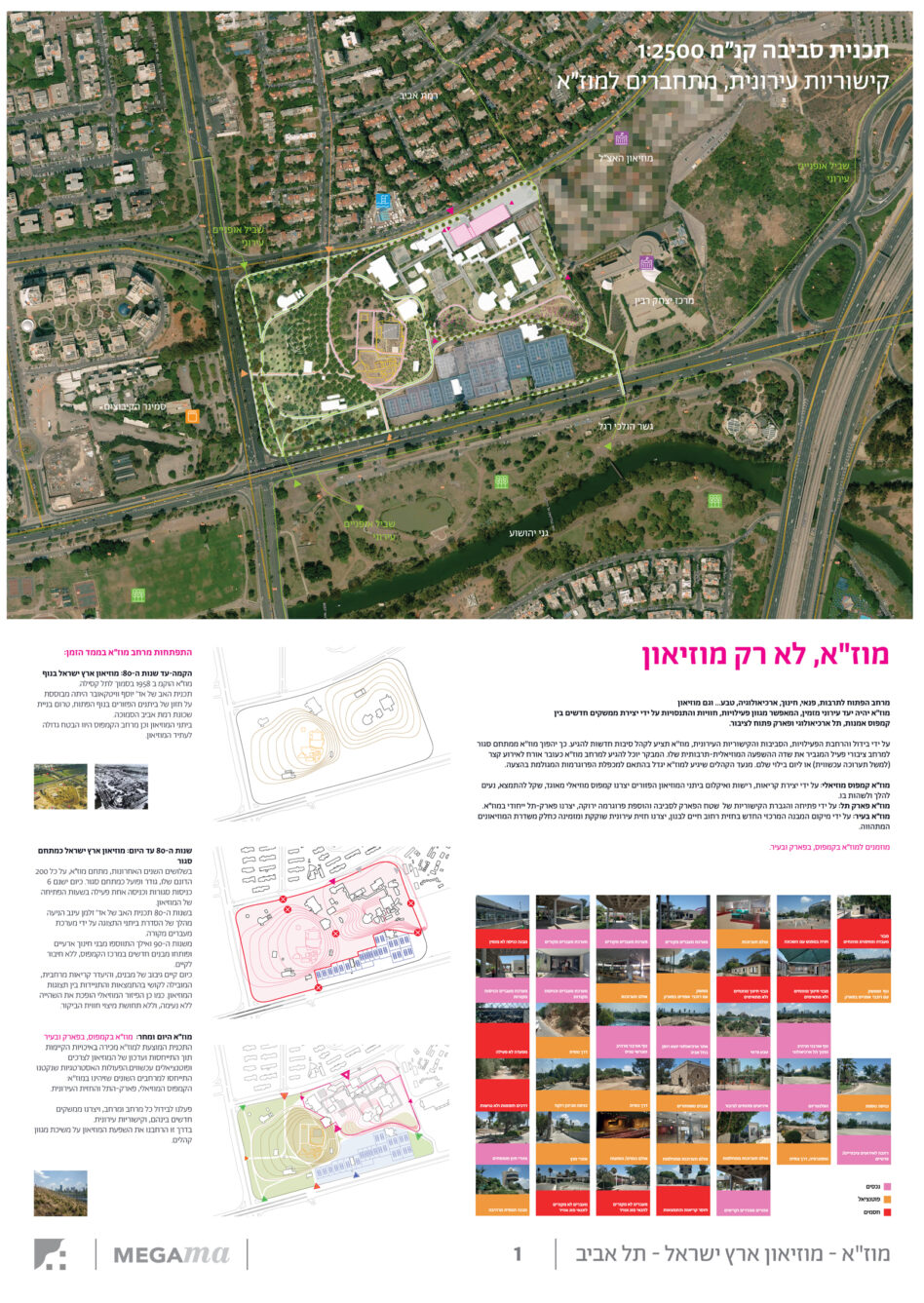
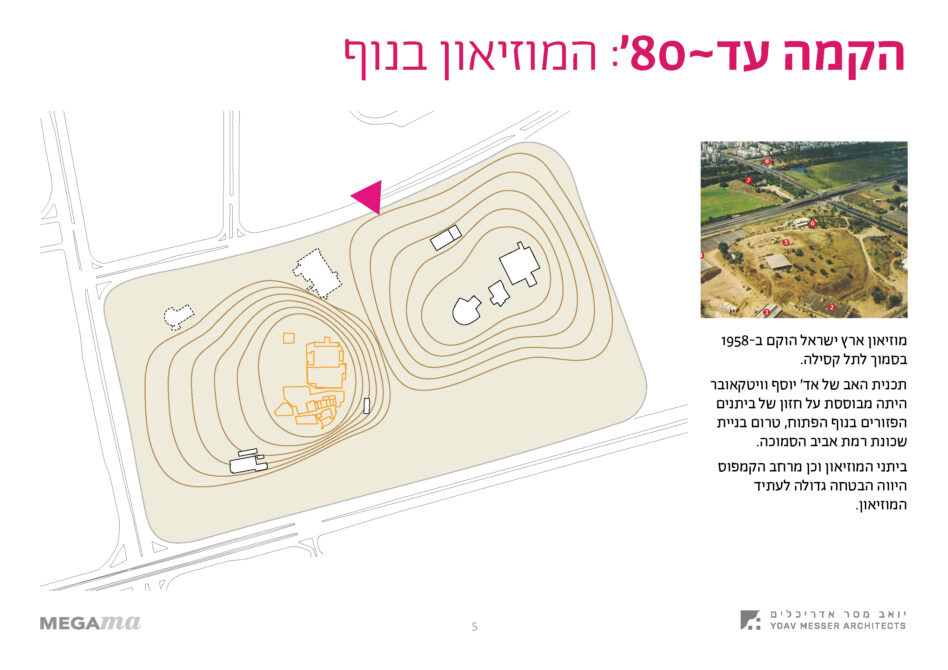
MUZA, Eretz Israel Museum, Tel Aviv, is a multi-disciplinary museum focusing on local material culture, crafts, and design.
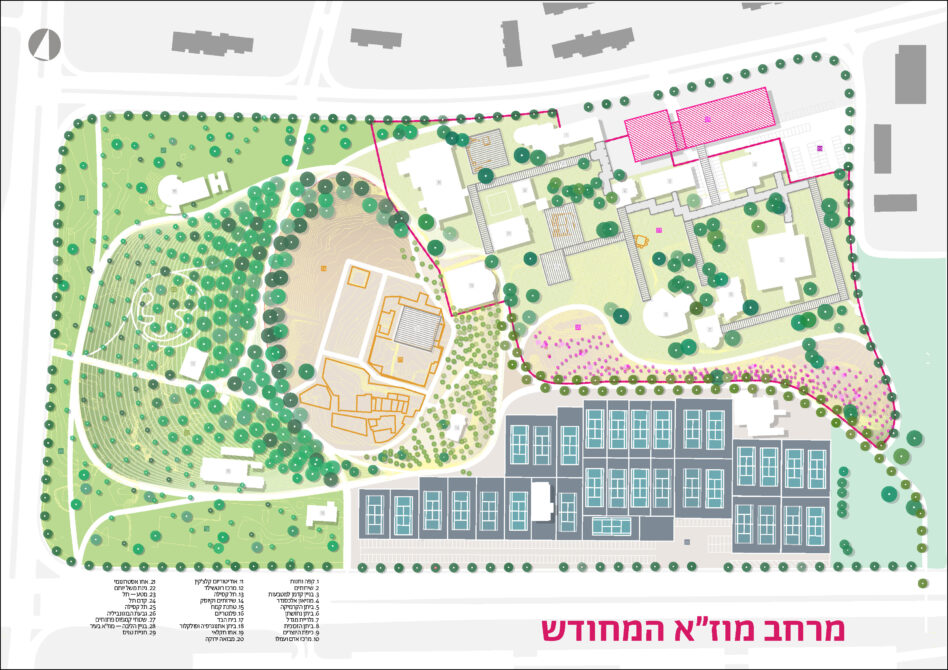
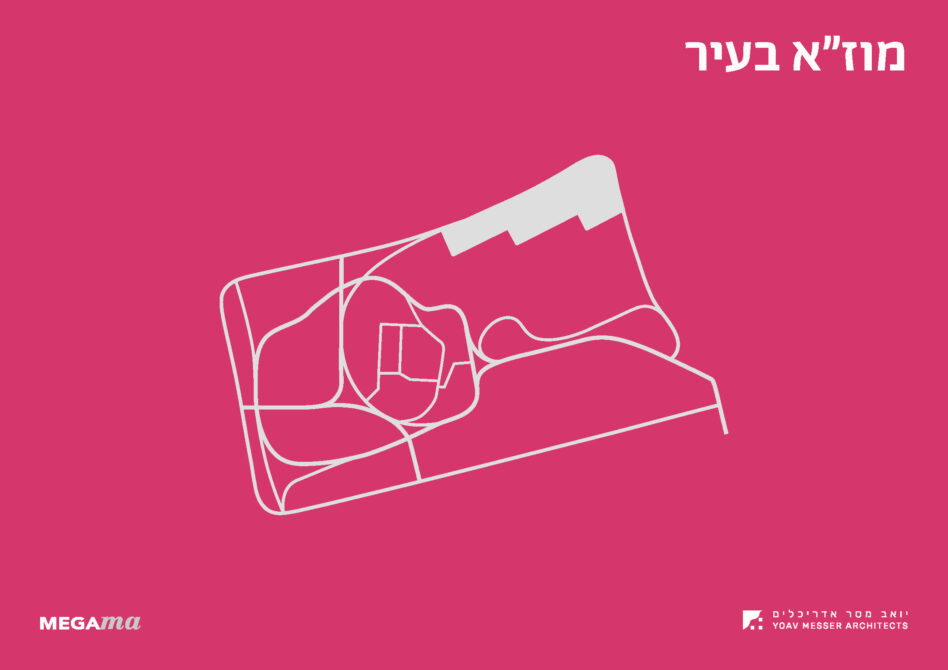
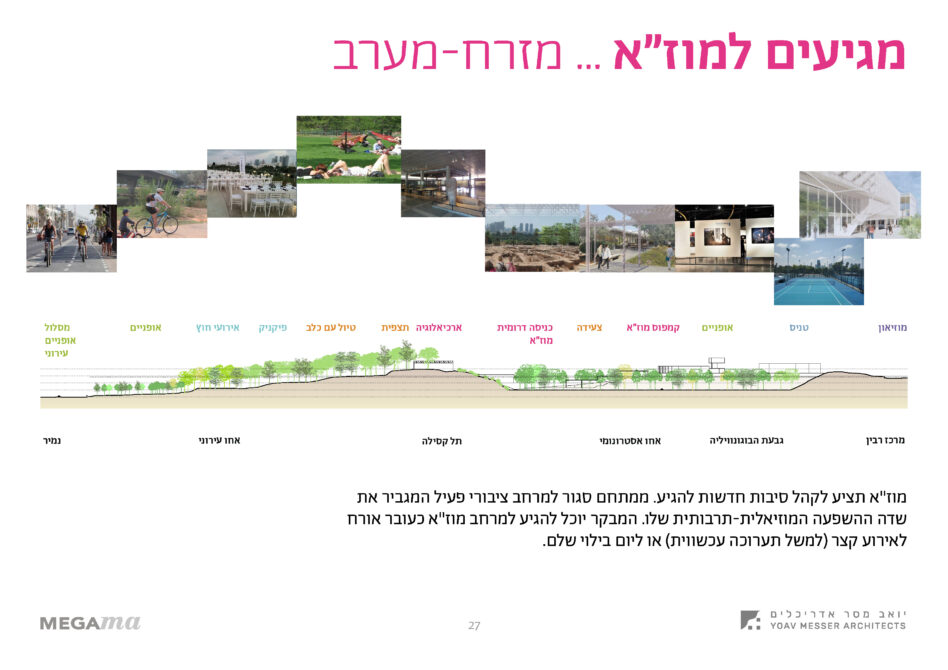
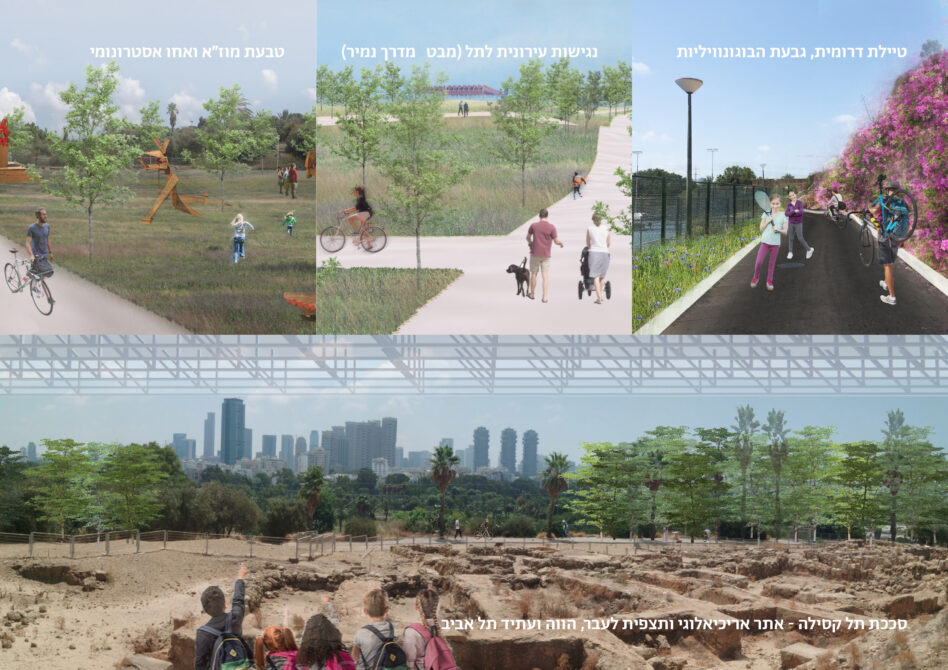
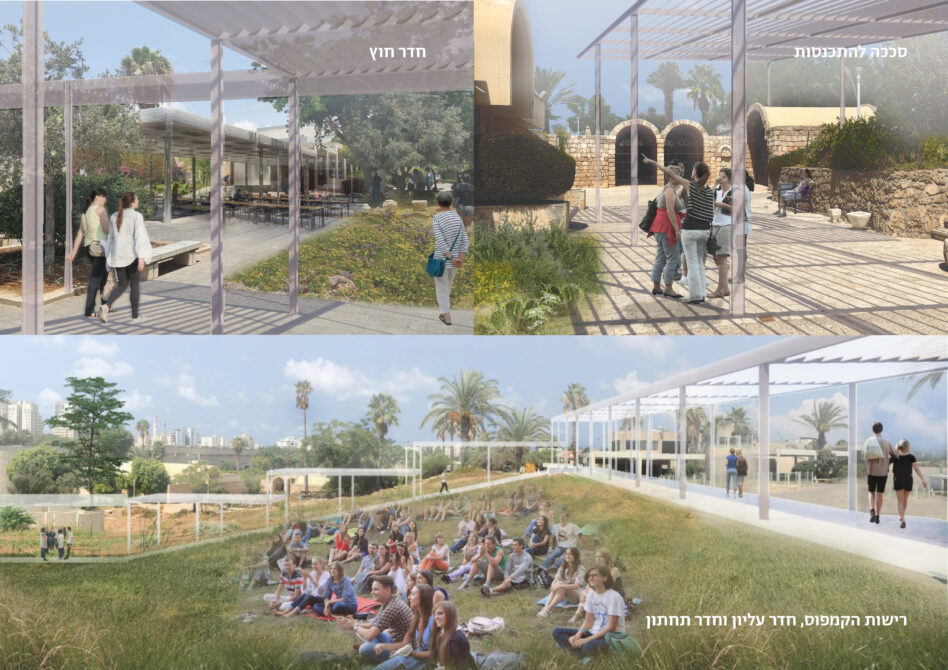
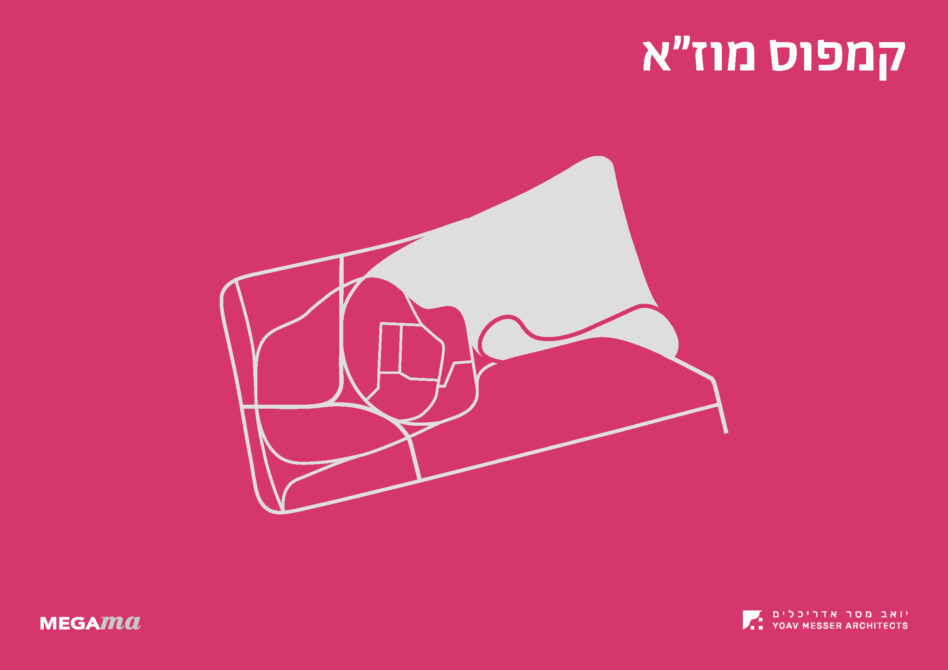
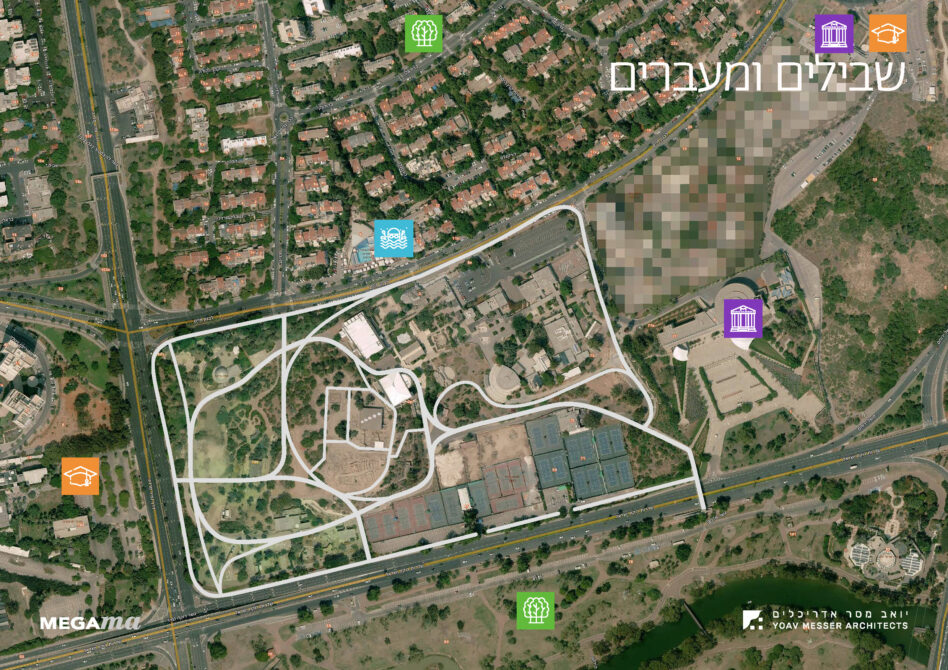
MUZA not just a museum, is a strategic spatial plan competition entry for renewing and expanding the existing institution. We propose investing first in an open, accessible landscape for culture, leisure, education, archaeology, and nature. As a museum-park, MUZA becomes a welcoming urban destination, enabling diverse activities, experiences, and interactions by creating new interfaces between an art campus, an archaeological dig, and a public park.
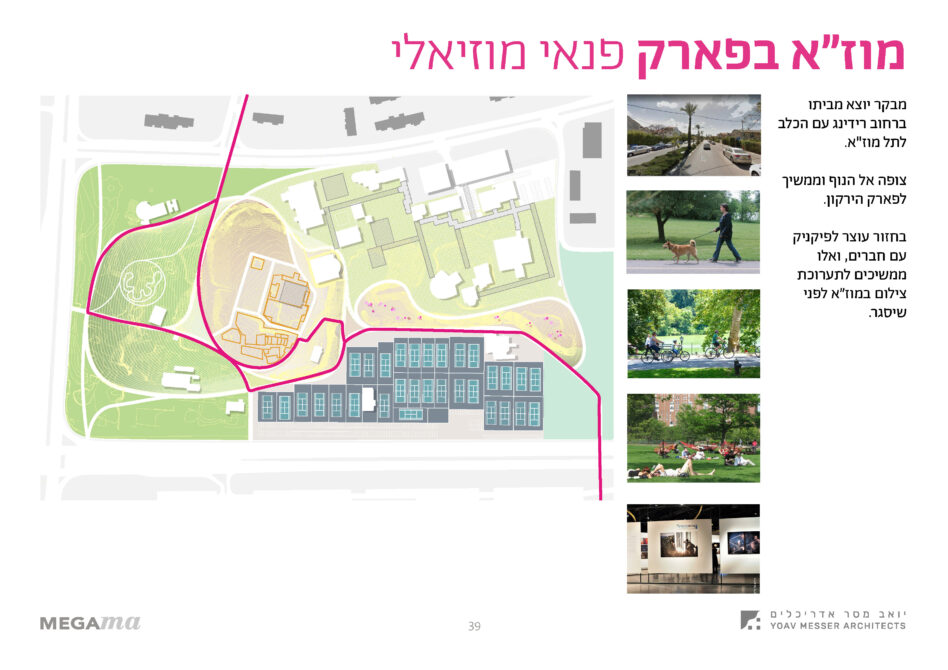
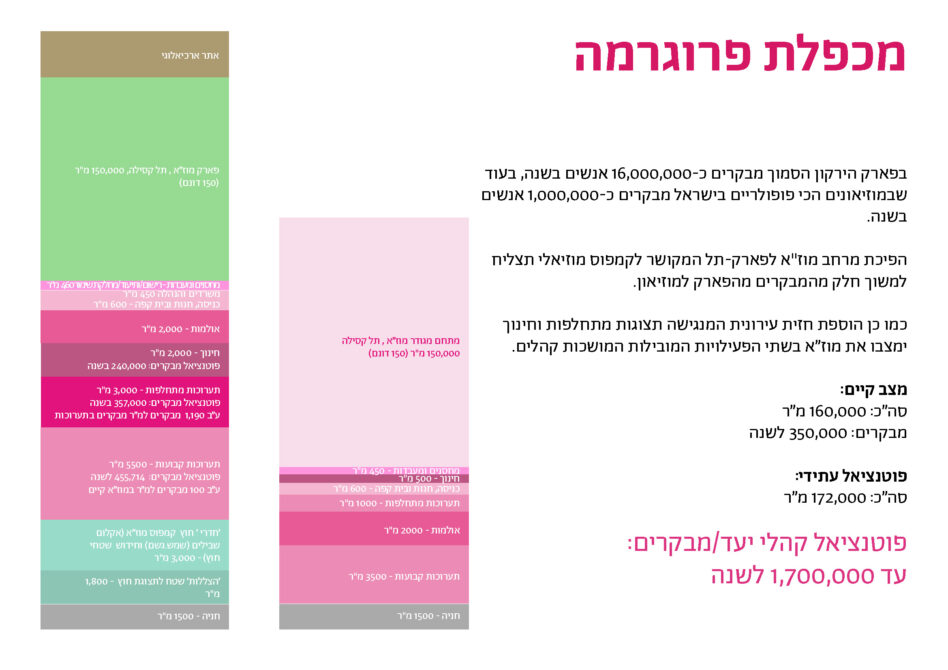
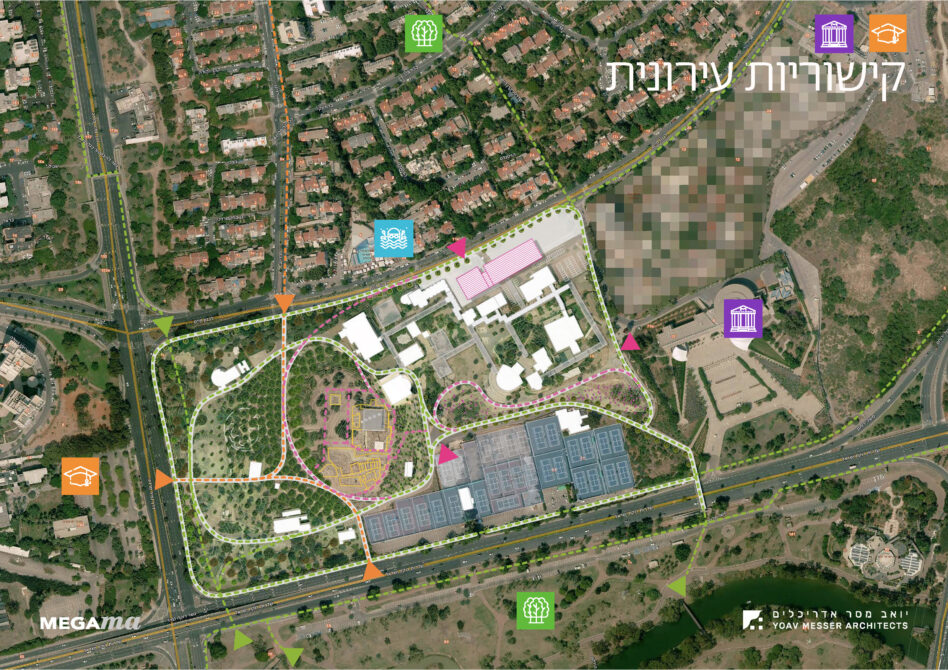
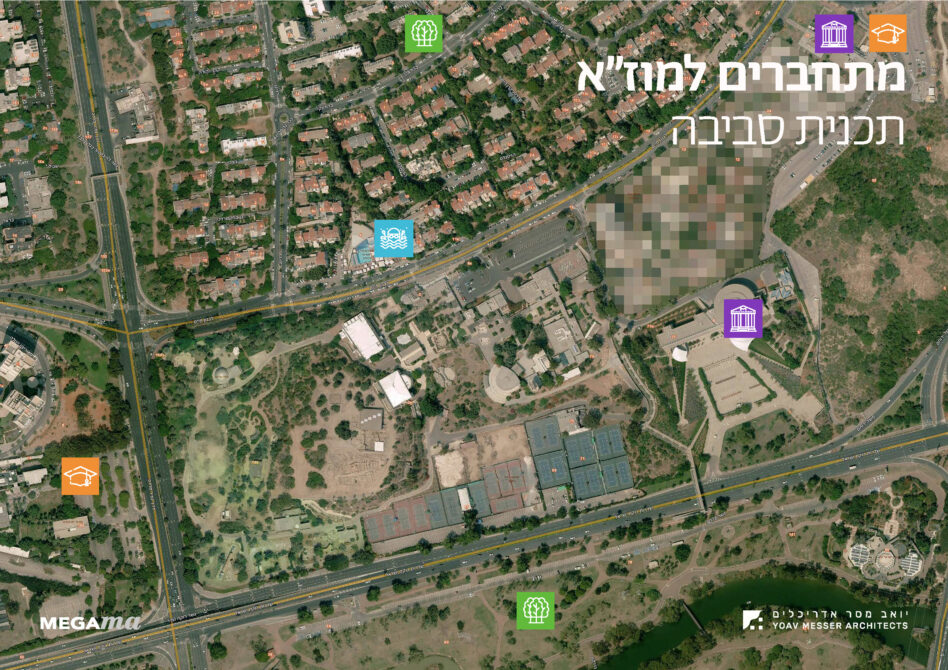
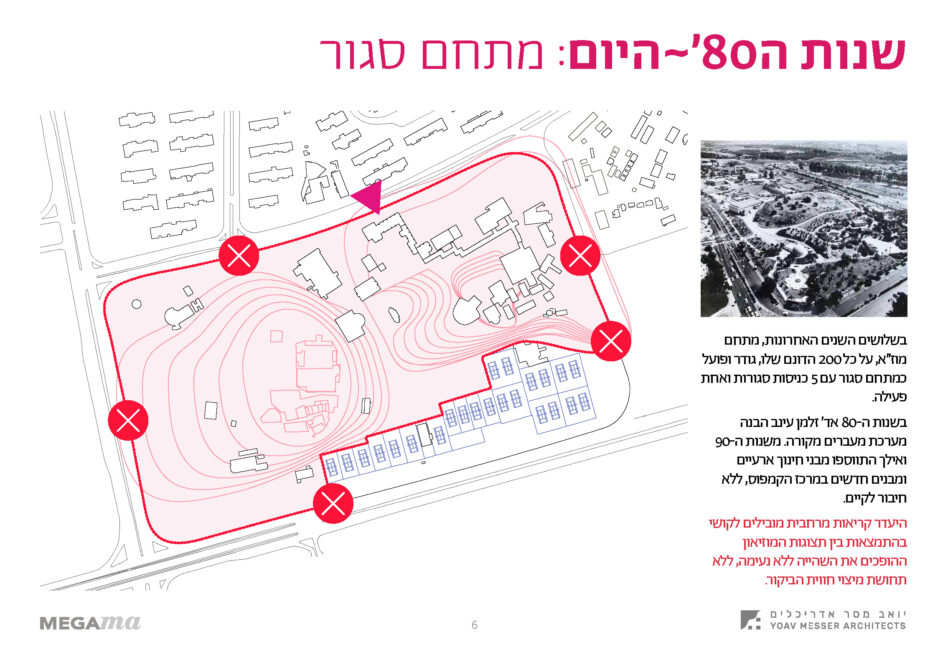
By expanding outdoor programs, introducing new environments, and reconnecting the museum to its neighbourhood and Ganei Yehoshua Park, MUZA shifts from a closed, introverted complex into an active public amenity that amplifies its cultural and museological impact.
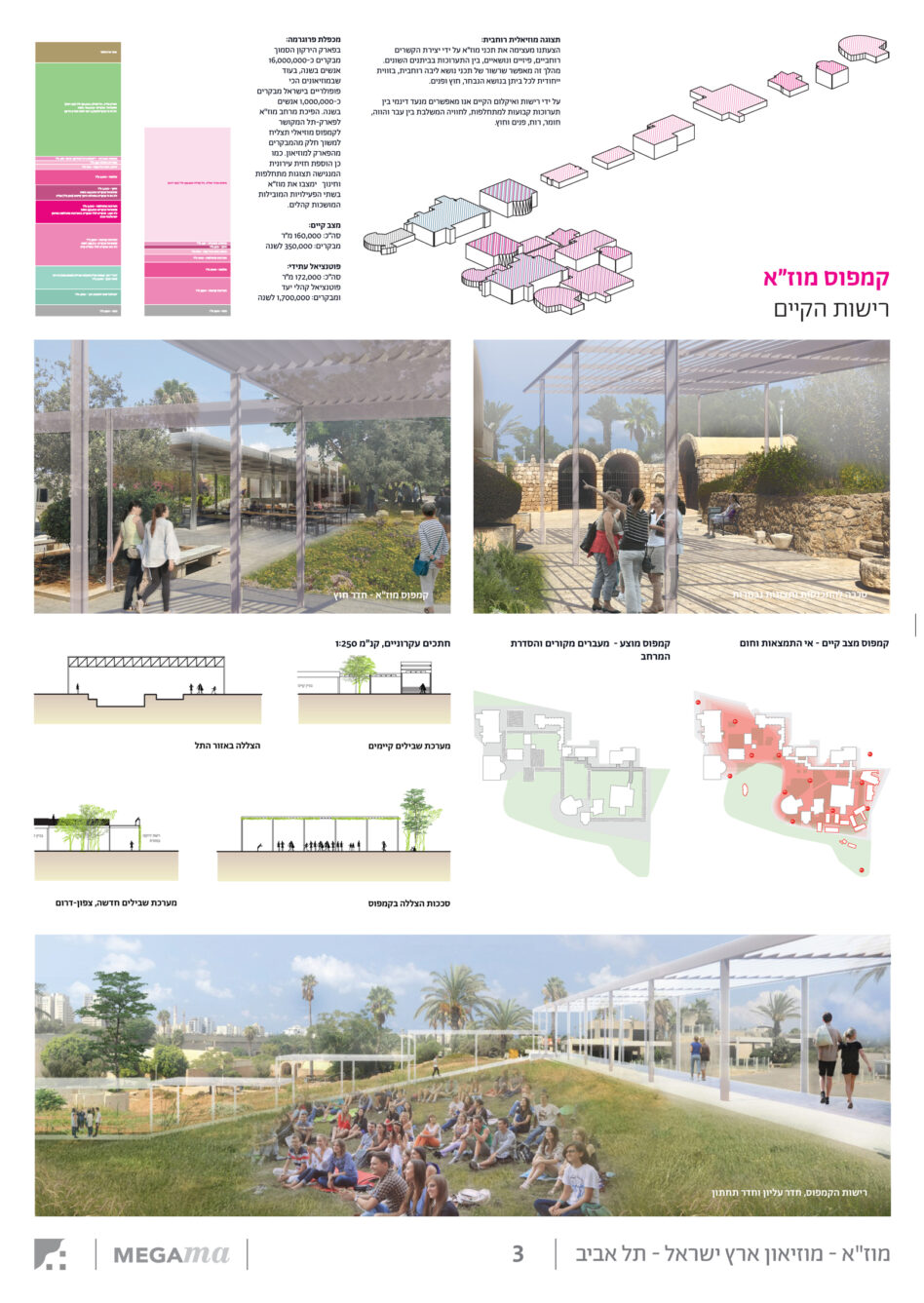
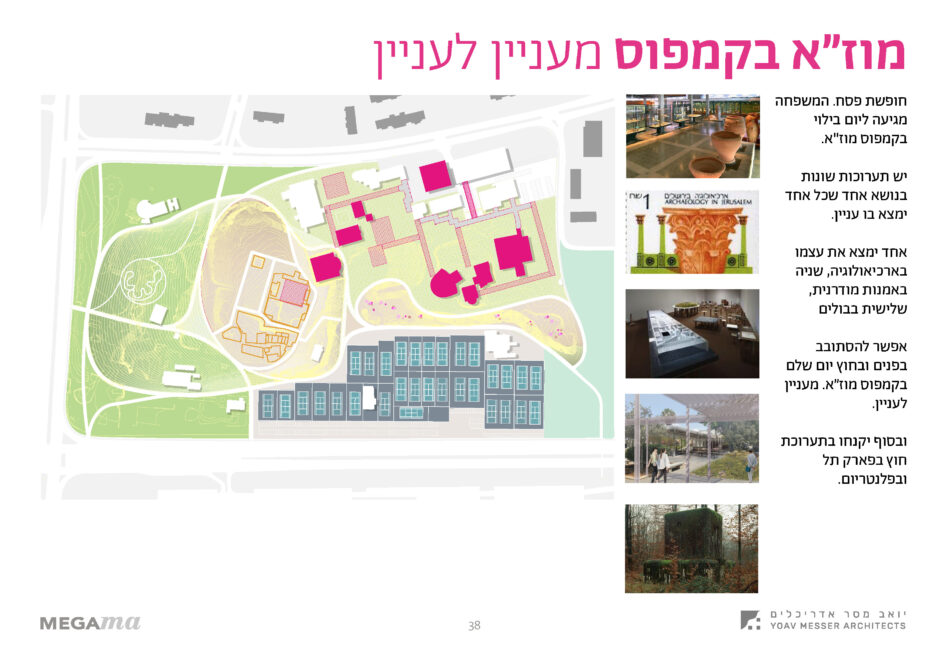
Visitors may arrive as passersby from the adjacent park, for a short event (such as a contemporary exhibition) or spend an entire day on site. With a broader mix of indoor and outdoor uses, MUZA will attract a wider range of audiences.
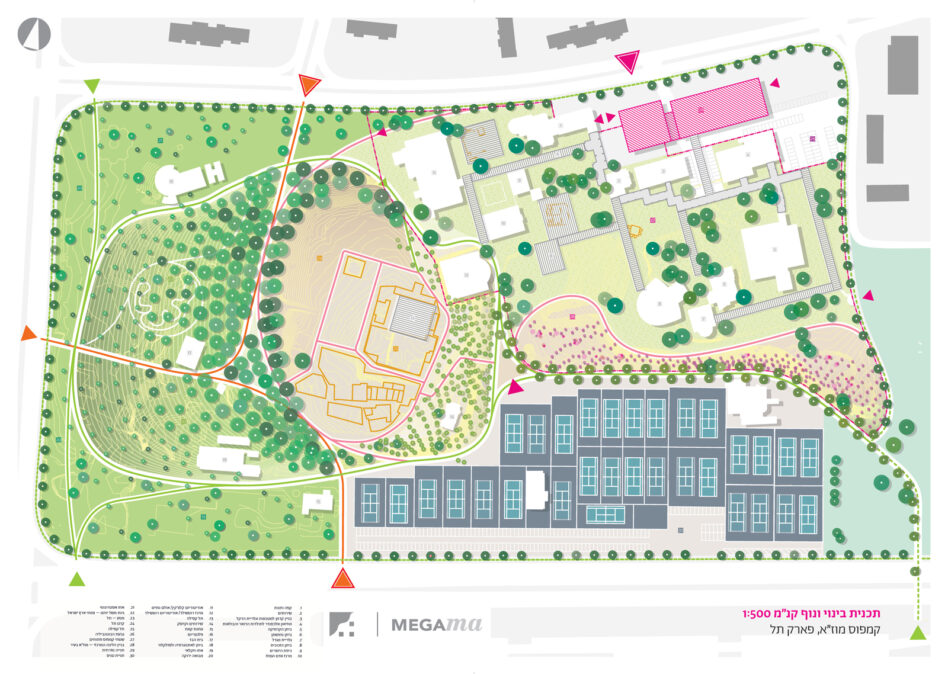
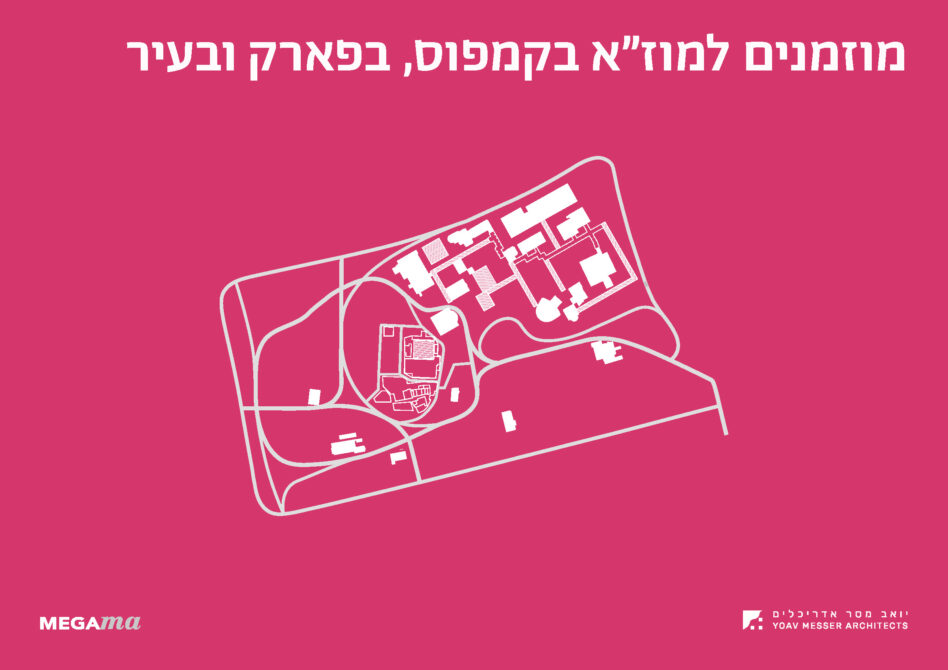
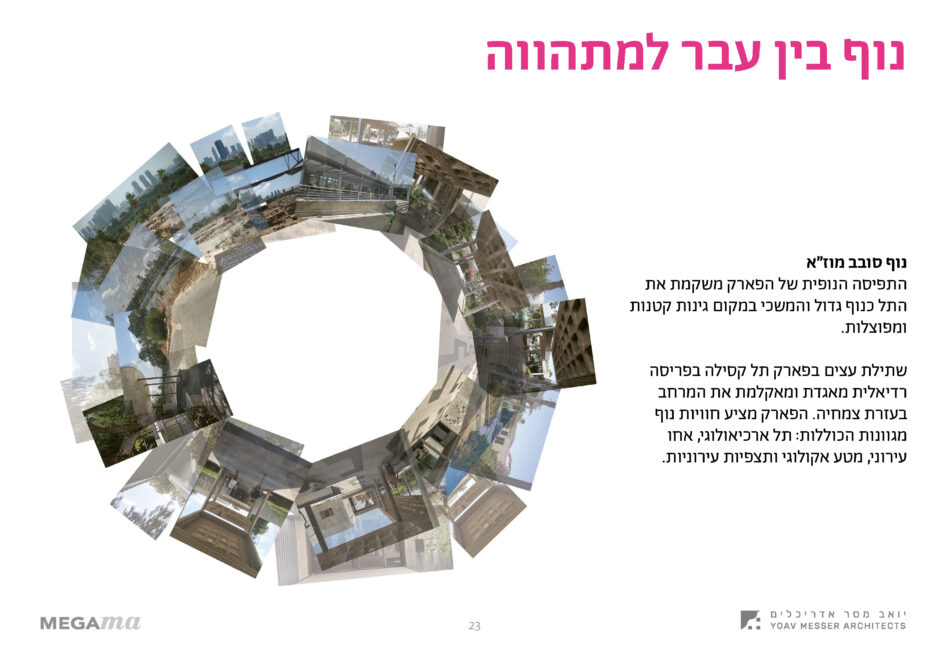
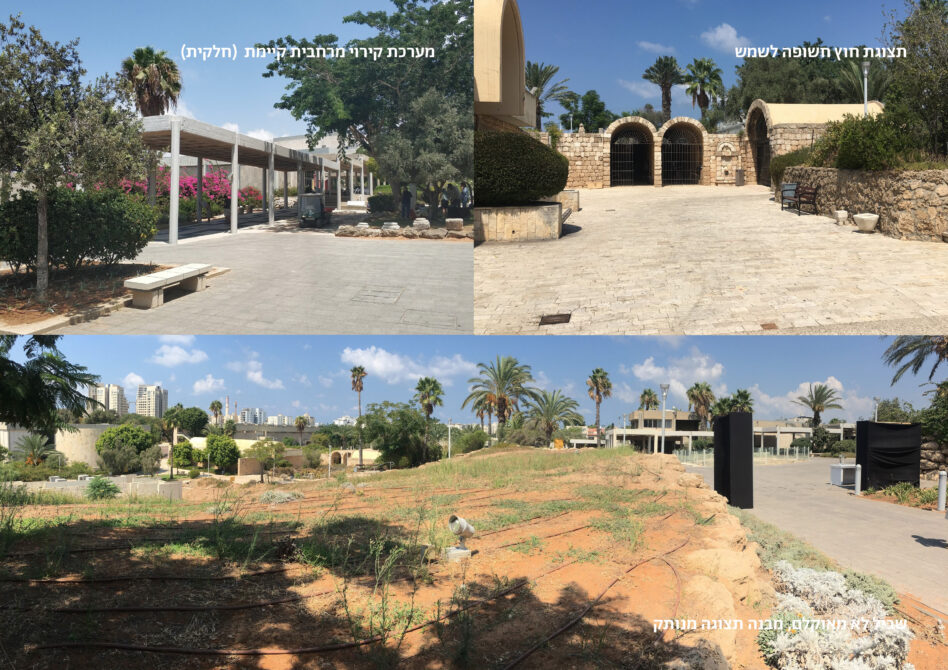
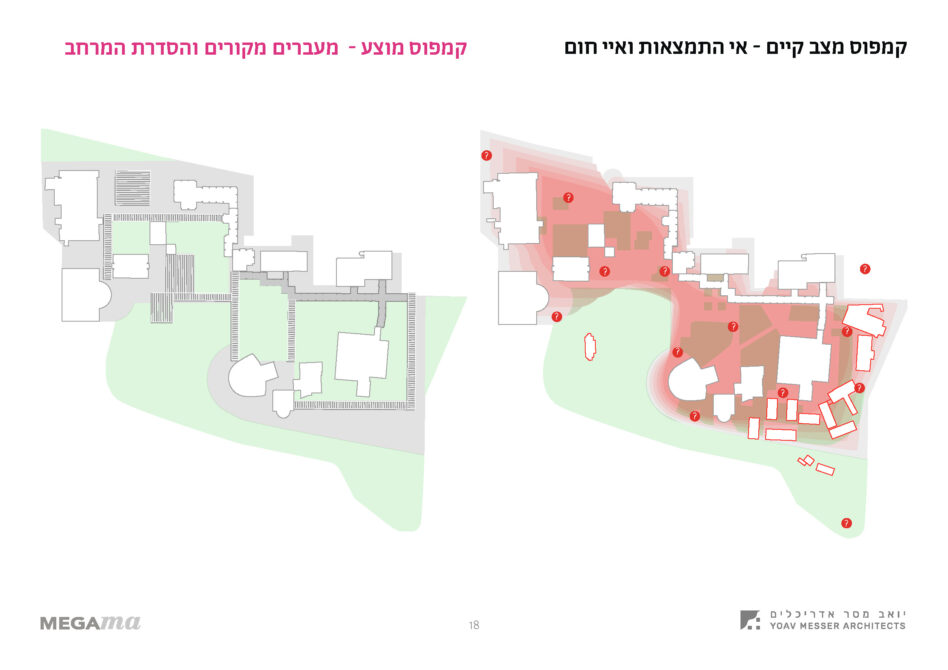
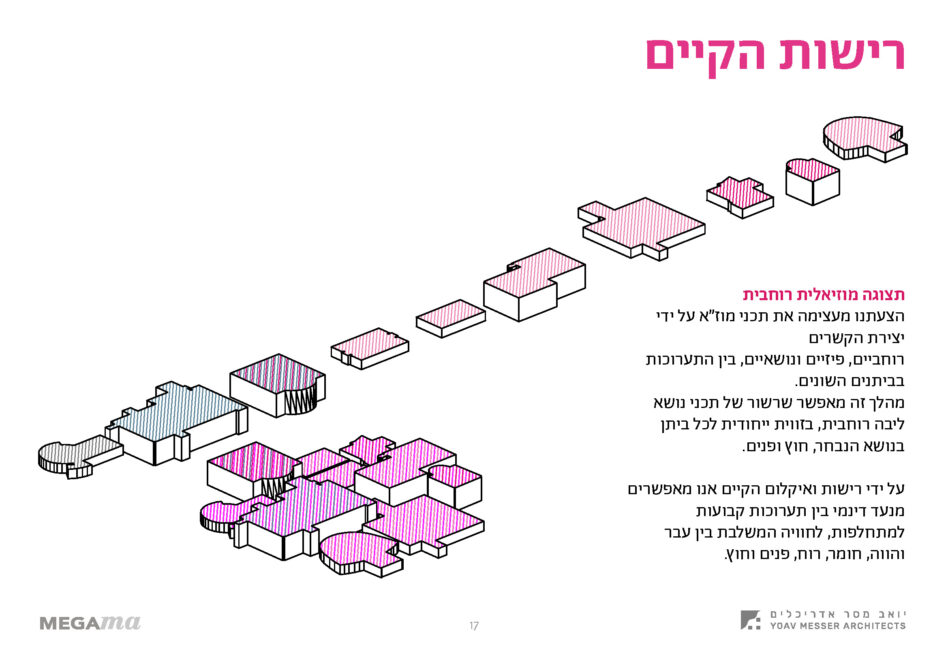
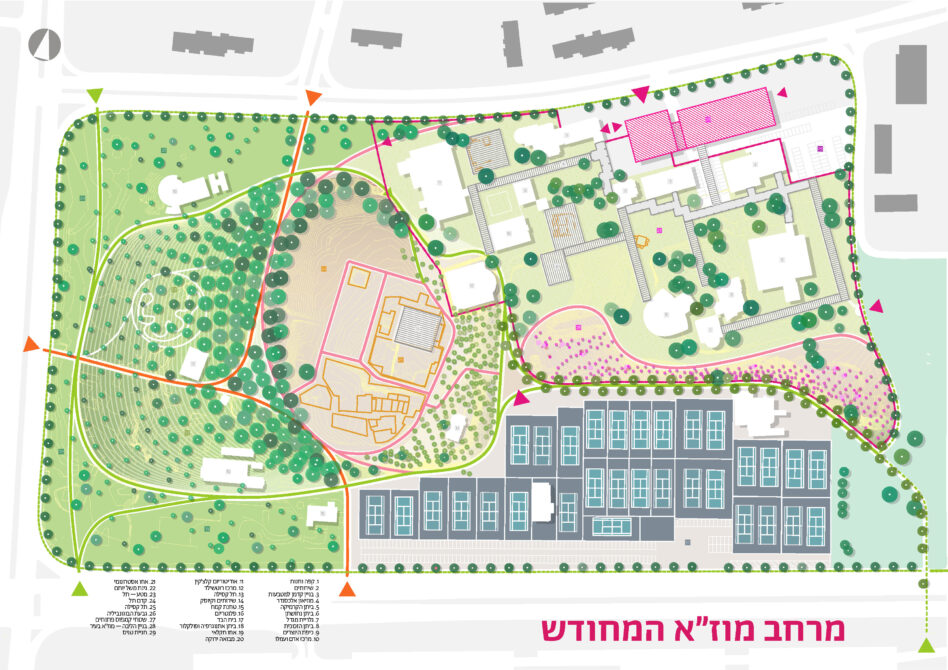
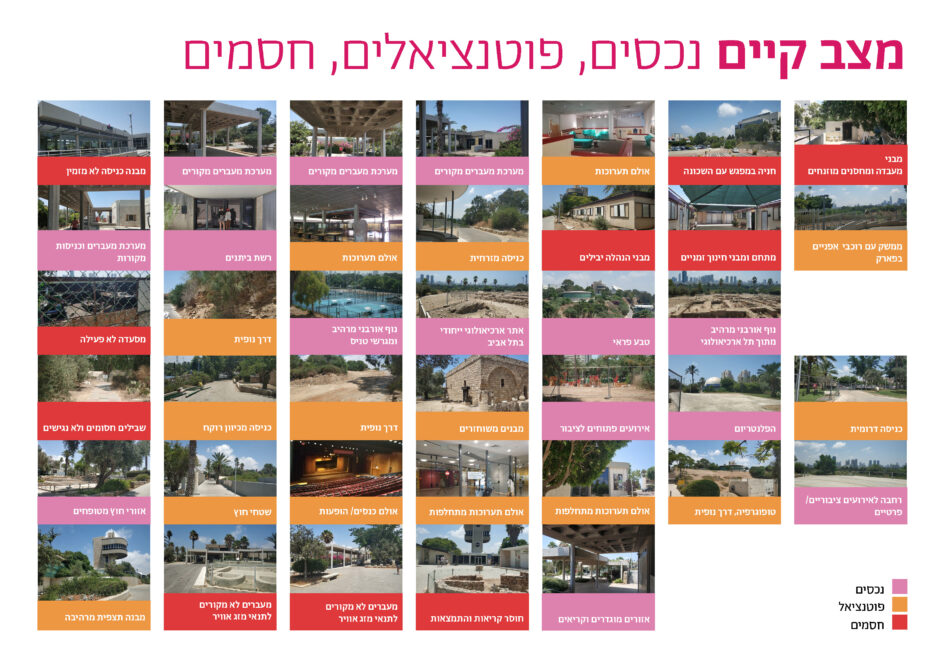
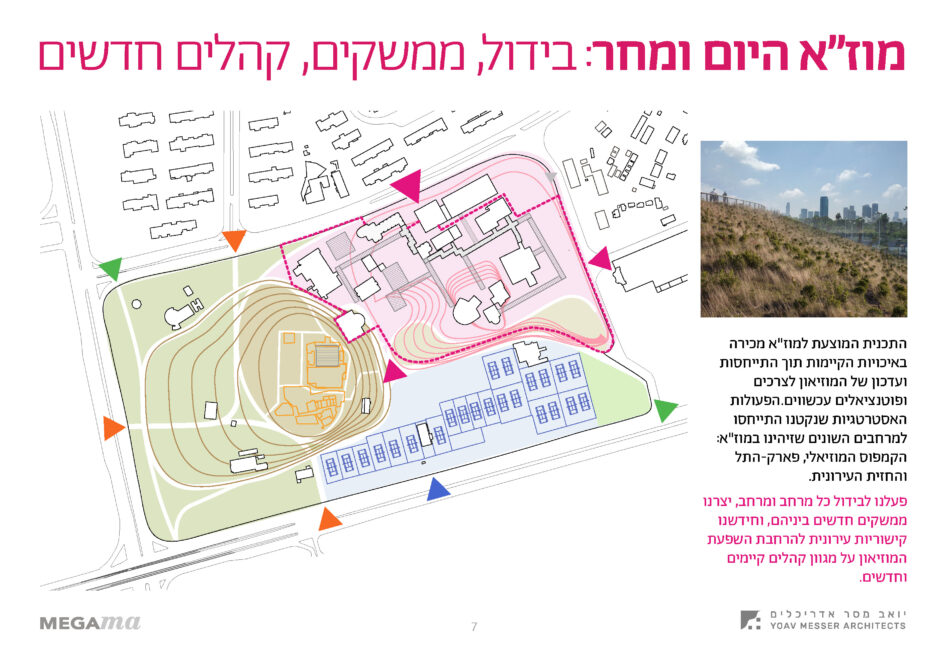
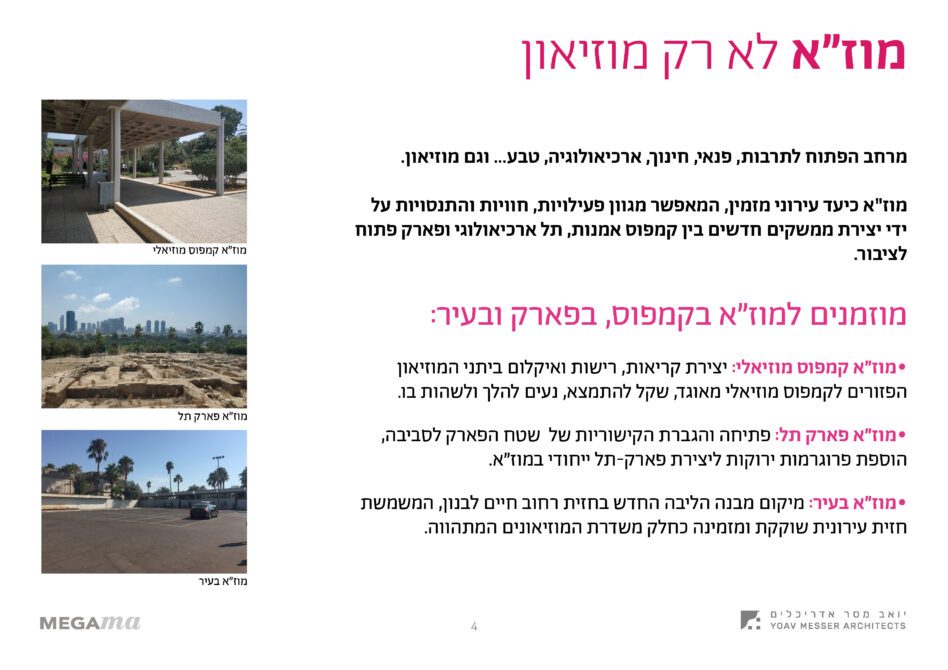
MUZA Museum Campus: By interrelating existing buildings, strengthening connectivity, and adapting the dispersed pavilions for year-round use, we form a cohesive campus that is easy to navigate and inhabit.
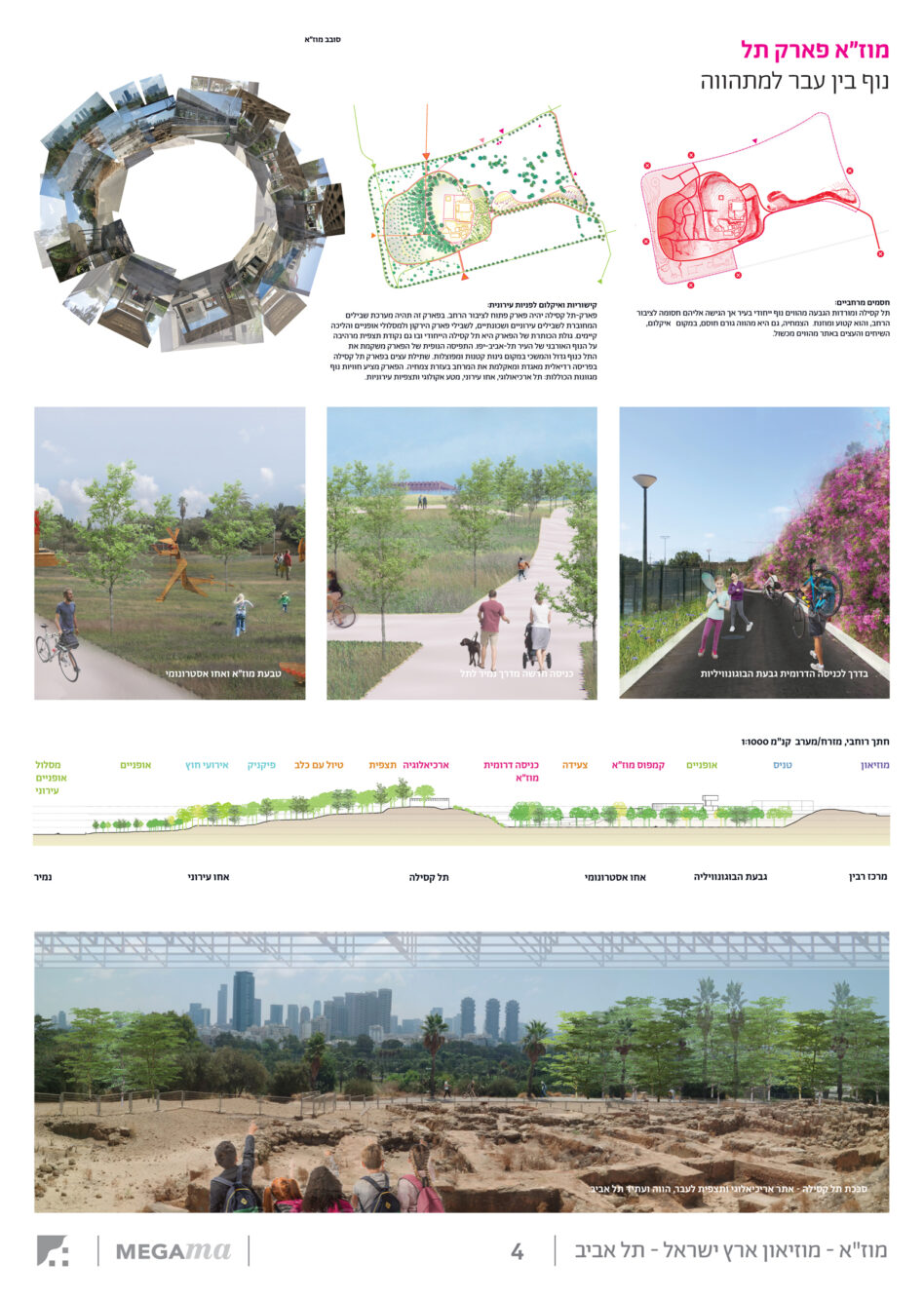
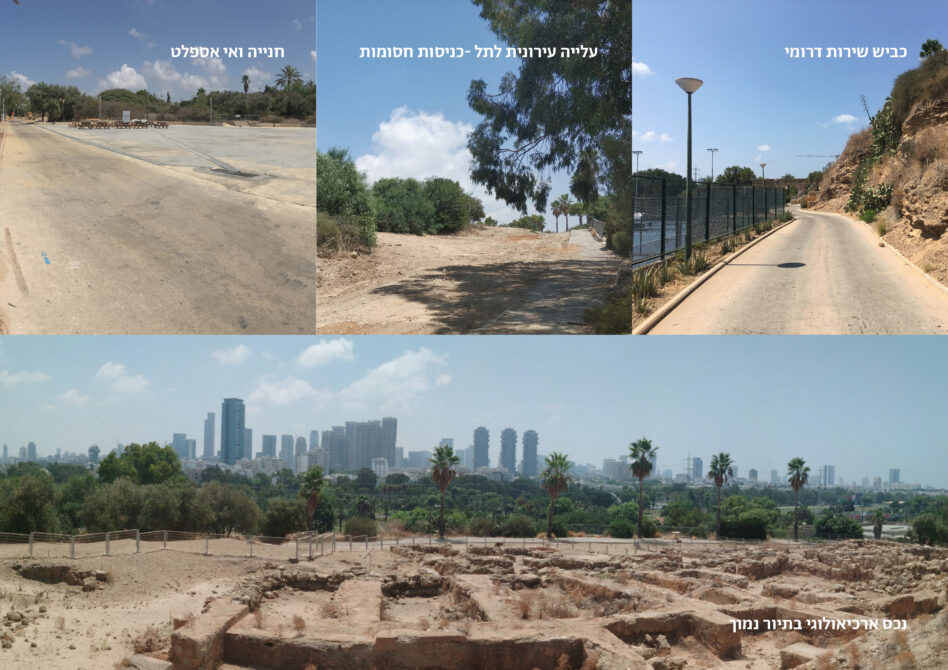
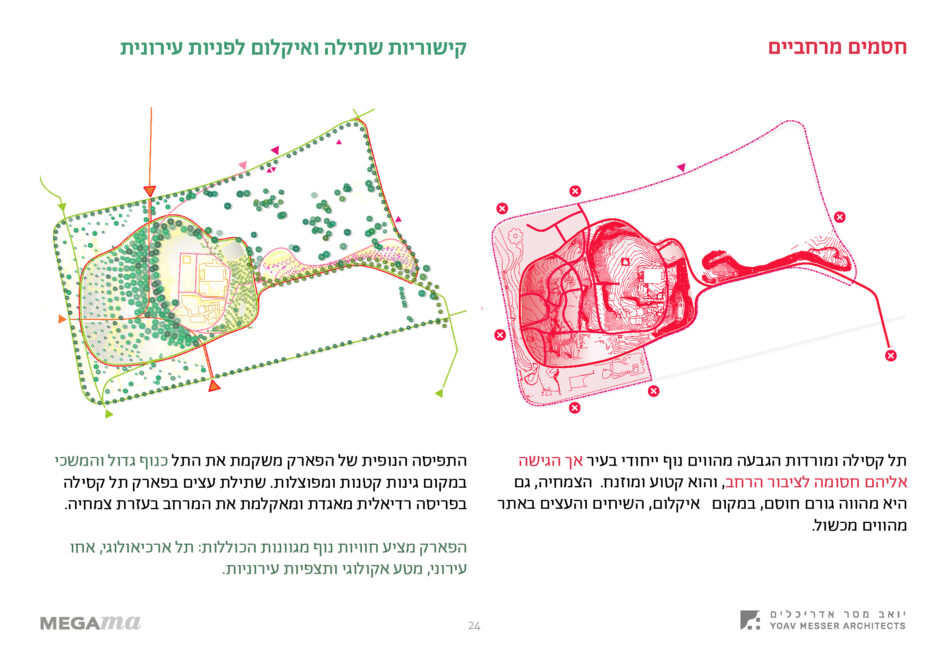
MUZA Tel Park: By accessing the archeological park from its surround, we create a unique archaeological landscape that juxtaposes past, present, and future.
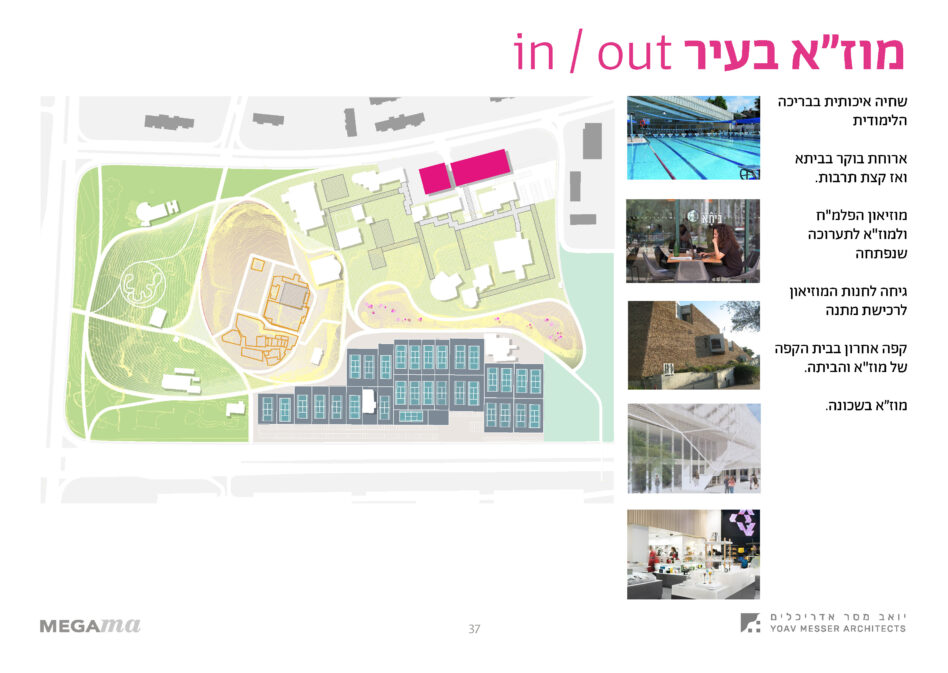
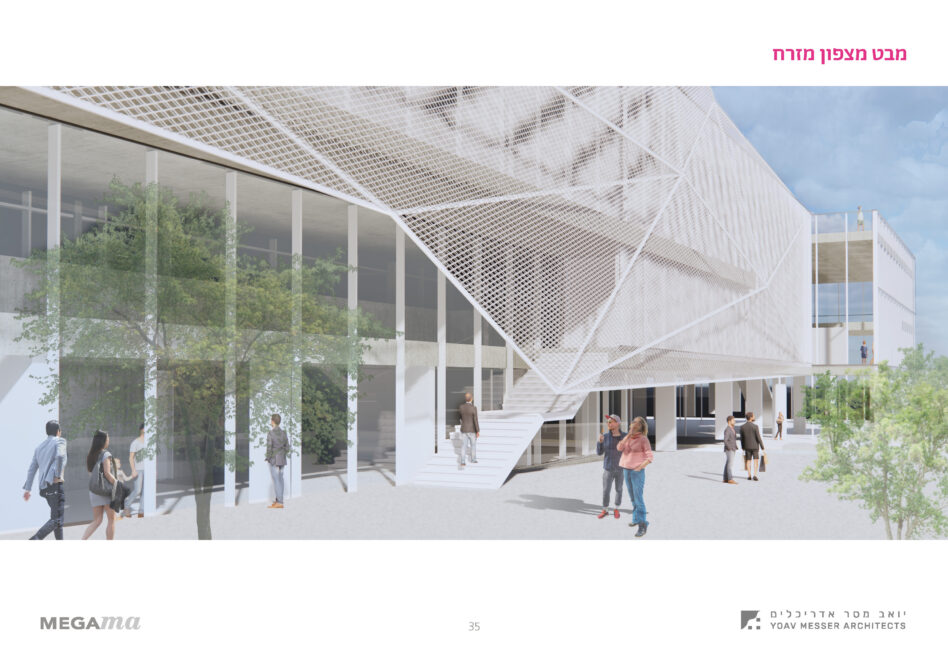
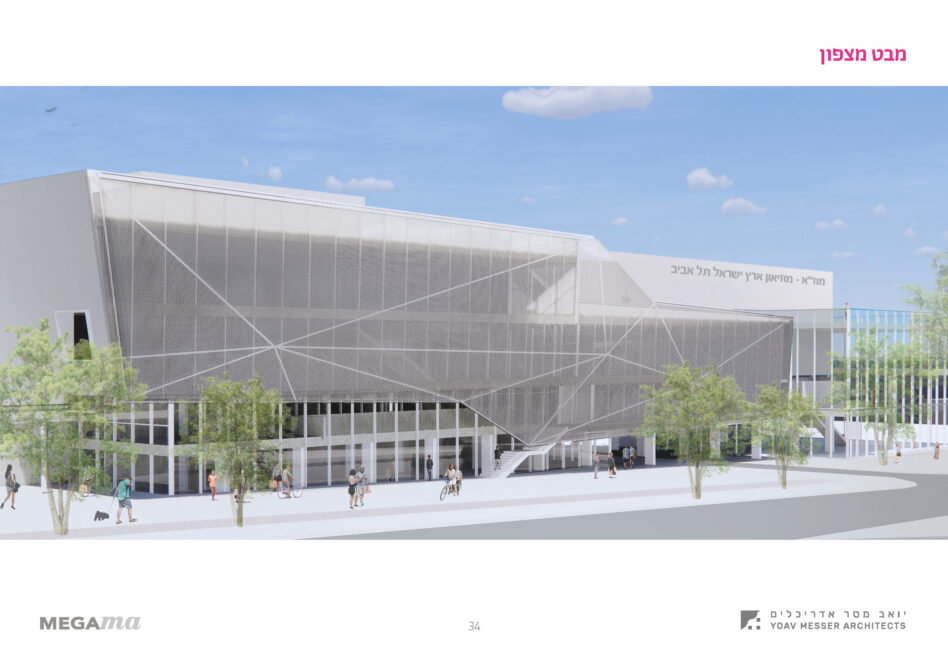
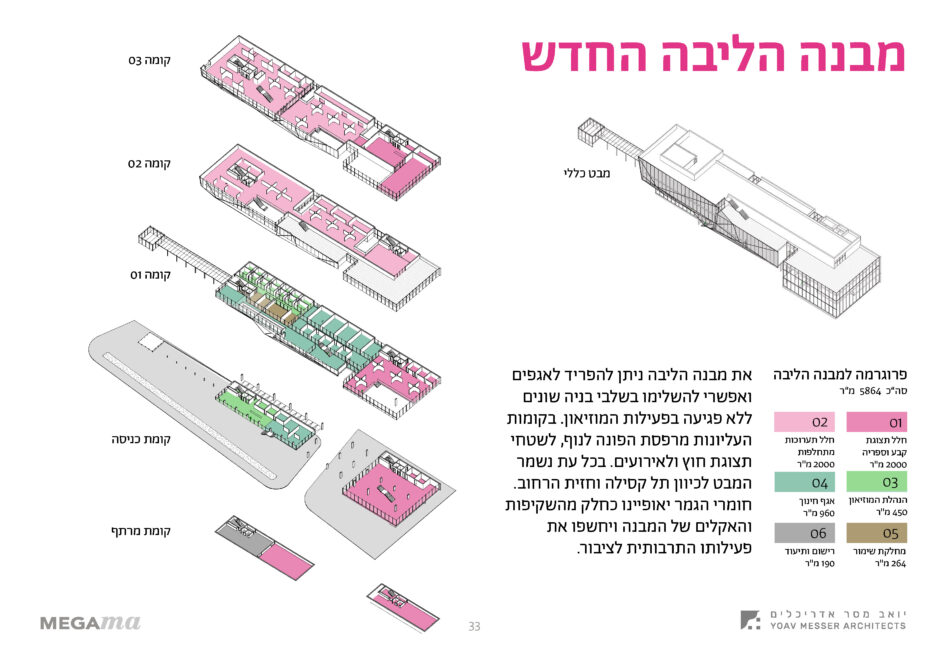
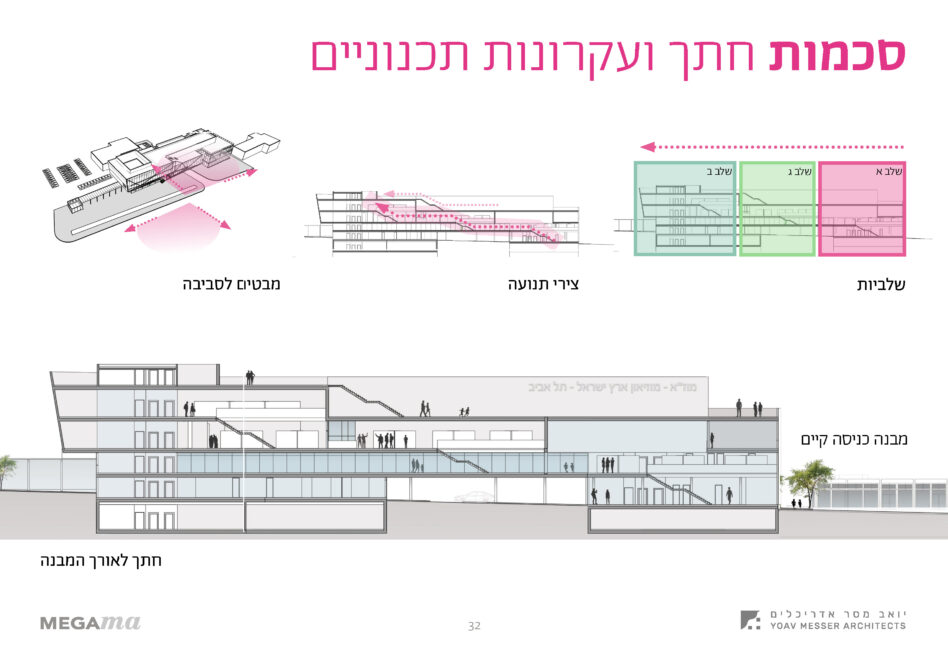
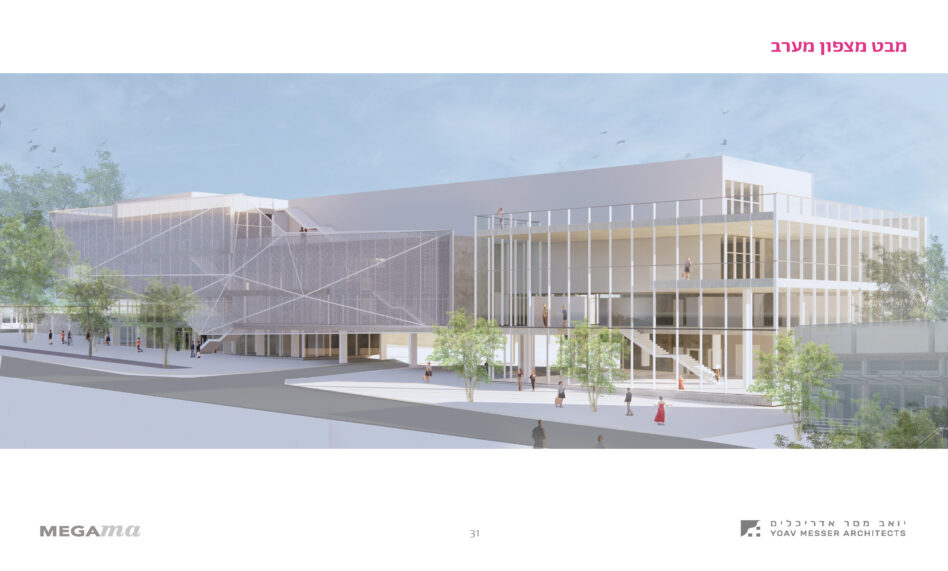
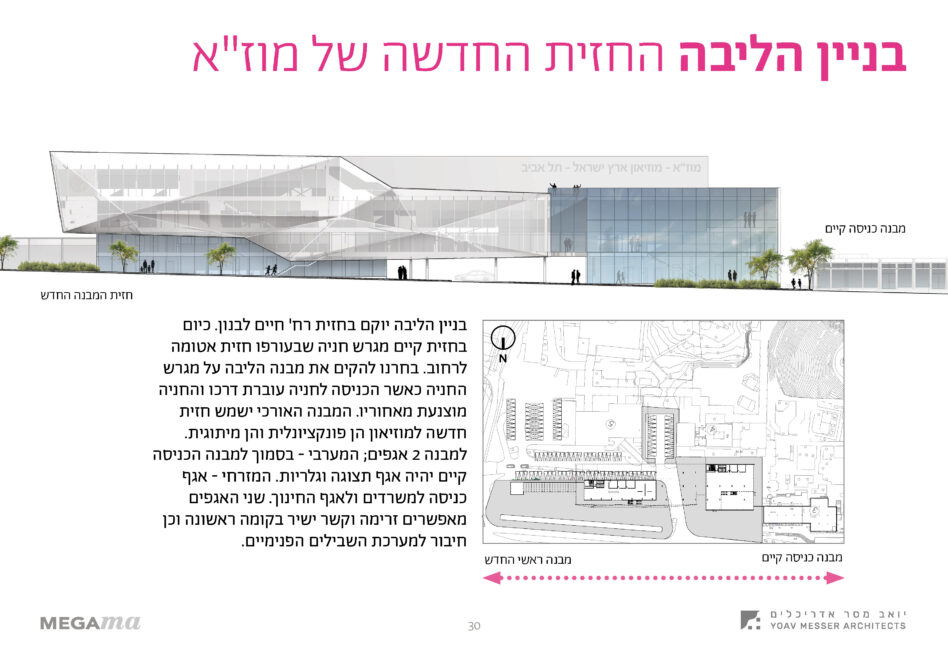
MUZA in the City: Positioning a new entry building along Haim Levanon Street, we establish a vibrant, inviting urban frontage as part of the emerging museum boulevard.
The proposal invites visitors to MUZA — in the campus, in the park, and in the city.
Postscript: The competition took place on the brink of the COVID-19 pandemic, when the museum’s outdoor spaces became a lifeline for exhibitions and visitors. The focus shifted from investing in a new building to reimagining the landscape potentials. A generous donation from the Mandel Foundation, matched by the Tel Aviv Municipality, enabled the transformation. Five years later, the MUZA Museum Park is open to the public, by Urbanof.